Published on May 5, 2026
The EPA's research capabilities are vital for our health. Discover how their decline impacts environmental protection.
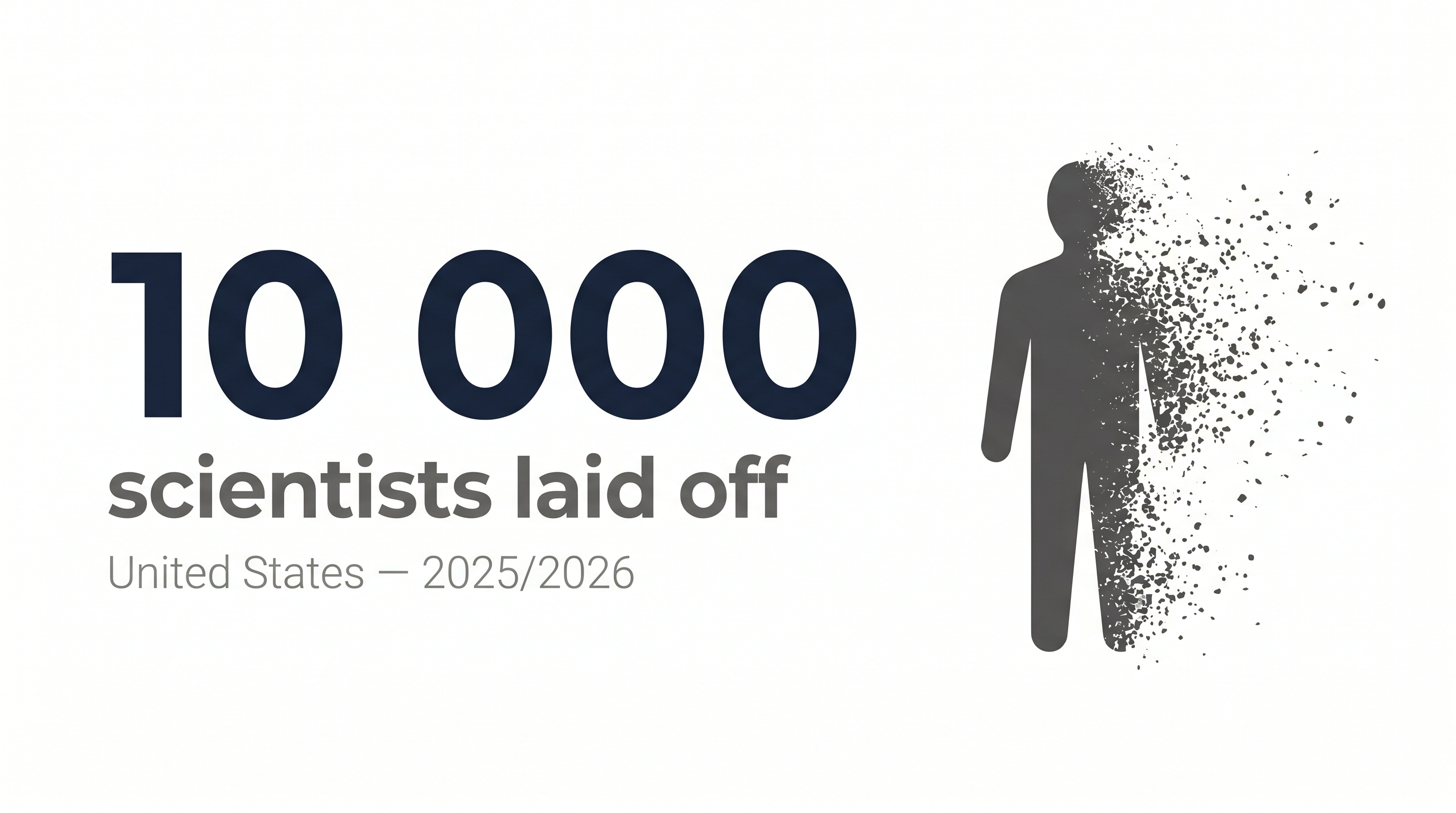
In May 2026, the last 124 researchers at the EPA — biologists, epidemiologists, toxicologists — were dismissed. In one year, 10,000 scientists left the world's leading environmental agency. What do we actually lose when an environmental protection agency stops doing science?
Why is EPA Research Crucial for Our Health?
Environmental health in the United States relies heavily on the U.S. Environmental Protection Agency's (EPA) capacity for robust research. These efforts are fundamental for identifying emerging hazards, assessing risks, and developing effective public health policies. Without strong research, detecting contaminants like PFAS or understanding air pollution effects becomes more challenging (Shaffer et al., 2025). The weakening of this scientific infrastructure directly undermines the EPA's mission, leaving populations more vulnerable to harmful exposures.
The integration of advanced methodologies, such as artificial intelligence, into environmental research is also hampered when foundational research capabilities are eroded (Panteli et al., 2025). This raises questions about our collective ability to anticipate and respond to future environmental challenges.
How Does Reduced Research Affect Risk Assessment and Policy?
The EPA's ability to conduct risk assessments and formulate policy is directly proportional to the strength of its research enterprise. A reduction in these capabilities hinders the generation of evidence needed to inform air quality standards and other regulations designed to protect susceptible populations, including children and environmental justice communities (Sullivan & Kohl, 2025). Historically, the integration of epidemiologic analyses into EPA assessments has been inconsistent, an issue that could be exacerbated by diminished research resources (Shaffer et al., 2025).
But what happens when this scientific evidence is lacking to guide decisions? The answer, documented in numerous publications, challenges conventional wisdom about the effectiveness of environmental policies.
What Science Says, Without Settling the Debate
The scientific consensus is strong: reduced EPA research capabilities have significant negative consequences for American environmental health. This impacts the ability to identify threats, assess risks, and protect populations, especially the most vulnerable. Debates persist regarding the optimal integration of epidemiologic studies into risk assessments and the rapid adoption of new technologies like AI into regulatory frameworks (Panteli et al., 2025; Shaffer et al., 2025). To go further, discover the full analysis of academic sources in the detailed article.
Sources
- Shaffer, R. M., Lee, A. L., Nachman, R., Christensen, K., Bateson, T. (2025). A Perspective from US Environmental Protection Agency (EPA) Scientists: How Your Epidemiologic Analyses Can Inform the Human Health Risk Assessment Process. Environmental Health Perspectives.
- Sullivan, M., Kohl, E. (2025). Children's environmental health, environmental justice and PM2.5 regulation in the US, 1997–2024. Environmental Health.
- Panteli, D., Adib, K., Buttigieg, S., Goiana-da-Silva, F., Ladewig, K. (2025). Artificial intelligence in public health: promises, challenges, and an agenda for policy makers and public health institutions. Lancet Public Health.
- Stanek, L., Cascio, W. E., Barzyk, T., Breen, M., DeLuca, N. M. (2024). Environmental public health research at the U.S. Environmental Protection Agency: A blueprint for exposure science in a connected world. Journal of Exposure Science and Environmental Epidemiology.
- Adanma, U. M., Ogunbiyi, E. O. (2024). The public health benefits of implementing environmental policies: A comprehensive review of recent studies. International Journal of Applied Research in Social Sciences.
- Beard, S., Freeman, K., Velasco, M., Boyd, W. A., Chamberlain, T. (2024). Racism as a public health issue in environmental health disparities and environmental justice: working toward solutions. Environmental Health.
Want to explore a scientific topic that interests you? Try Scinuance AI for free, no account needed.
Try Scinuance AI →📄 Associated Scinuance Report
Access the full report on EPA research capabilities: complete scientific sources, bibliography analysis, and synthesis of uncertainties.
View the report →